
101 distributions indexed
DistroDB
A database of Linux distributions, providing user-friendly, free information about various Linux distros. Search and filter based on your preferences, and discover the perfect Linux distribution for your needs.
Ubuntu
One of the most popular Linux distros, based on Debian and featuring a GNOME desktop. Ubuntu is designed to be easy to use, with a focus on usability and regular releases.

Linux Mint
Linux Mint is a user-friendly and easy-to-use distro, developed by the community and based on Ubuntu. It's a nice entry point for beginners.

Debian
Debian is a legendary distro for its stability and strict adherence to free software principles. Serving as the upstream foundation for Ubuntu, Mint, and countless others it remains the gold standard for production servers and bulletproof desktop setups

Fedora Workstation
Red Hat's flagship developer-focused Fedora edition - GNOME desktop, RPM/DNF packaging, and the first place new features land before reaching RHEL.

Arch Linux
Arch Linux is an independently developed, x86_64-optimised Linux distribution targeted at competent Linux users. It uses 'pacman', its home-grown package manager, to provide updates to the latest software applications with full dependency tracking.

Manjaro Linux
Manjaro Linux is a fast, user-friendly, desktop-oriented operating system based on Arch Linux. Key features include intuitive installation process, automatic hardware detection, stable rolling-release model, ability to install multiple kernels, special Bash scripts for managing graphics drivers and extensive desktop configurability.

Pop!_OS
Pop!_OS is an Ubuntu-based Linux distribution featuring its own GNOME-based desktop environment called COSMIC. It is designed with productivity in mind; it has fluid windows, search navigation via the Super key, workspaces that can hide clutter, and efficient auto-tiling of windows.

MX Linux
MX Linux, a desktop-oriented Linux distribution based on Debian's "Stable" branch, is a cooperative venture between the antiX and former MEPIS Linux communities. Using Xfce as the default desktop (with separate KDE Plasma and Fluxbox editions also available), it is a mid-weight operating system designed to combine an elegant and efficient desktop with simple configuration, high stability, solid performance and medium-sized footprint.
EndeavourOS
EndeavourOS is a rolling-release Linux distribution based on Arch Linux. The project aims to be a spiritual successor to Antergos, providing an easy setup and a pre-configured desktop environment on an Arch base.

openSUSE Tumbleweed
openSUSE Tumbleweed is a flagship Linux distribution from the openSUSE Project. Unlike traditional operating systems that release major versions every few years, Tumbleweed follows a rolling release model.

openSUSE Leap
openSUSE Leap is the traditional, regular-release counterpart to Tumbleweed. It shares a common base system with SUSE Linux Enterprise (SLE), making it a great choice for users who want stability and long-term support.
Kali Linux
Kali Linux (formerly known as BackTrack) is a Debian-based distribution with a collection of security and forensics tools. It features timely security updates, support for the ARM architecture, a choice of four popular desktop environments, and seamless upgrades to newer versions.
NixOS
NixOS is an independently developed GNU/Linux distribution that aims to improve the state of the art in system configuration management. In NixOS, the entire operating system, including the kernel, applications, system packages and configuration files, are built by the Nix package manager.

Red Hat Enterprise Linux
Red Hat Enterprise Linux (RHEL) is a Linux distribution developed by Red Hat and targeted toward the commercial market. Red Hat Enterprise Linux is released in server editions for x86, x86_64, Itanium, PowerPC and IBM System z architectures, and desktop editions for x86 and x86_64 processors.
Rocky Linux
Rocky Linux is a community enterprise operating system designed to be 100% bug-for-bug compatible with Red Hat Enterprise Linux. It is available for the x86_64 and AArch64 processor architectures.

AlmaLinux OS
AlmaLinux OS is an open-source, community-driven project that is built from the source code of Red Hat Enterprise Linux (RHEL). AlmaLinux is a completely binary compatible fork of RHEL and it is maintained by AlmaLinux OS Foundation which is a register non-profit.
CentOS
CentOS as a group is a community of open source contributors and users which started in 2003 and has been sponsored by Red Hat since 2014. CentOS Linux versions up to CentOS Linux 8 are 100% compatible rebuilds of Red Hat Enterprise Linux, in full compliance with Red Hat's redistribution requirements.

Bazzite
Bazzite is an immutable Linux distribution based on Fedora and designed with gaming in mind. It can run on desktop computers, the Steam Deck, and other handheld gaming devices.
CachyOS
CachyOS is a Linux distribution based on Arch Linux. It focuses on speed and security optimisations - the default Linux kernel is heavily optimised using the BORE (Burst-Oriented Response Enhancer) scheduler, while the desktop packages are compiled with LTO, x86-64-v3 and x86-64-v4, Zen 4 optimization, security flags and performance improvements.
Zorin OS
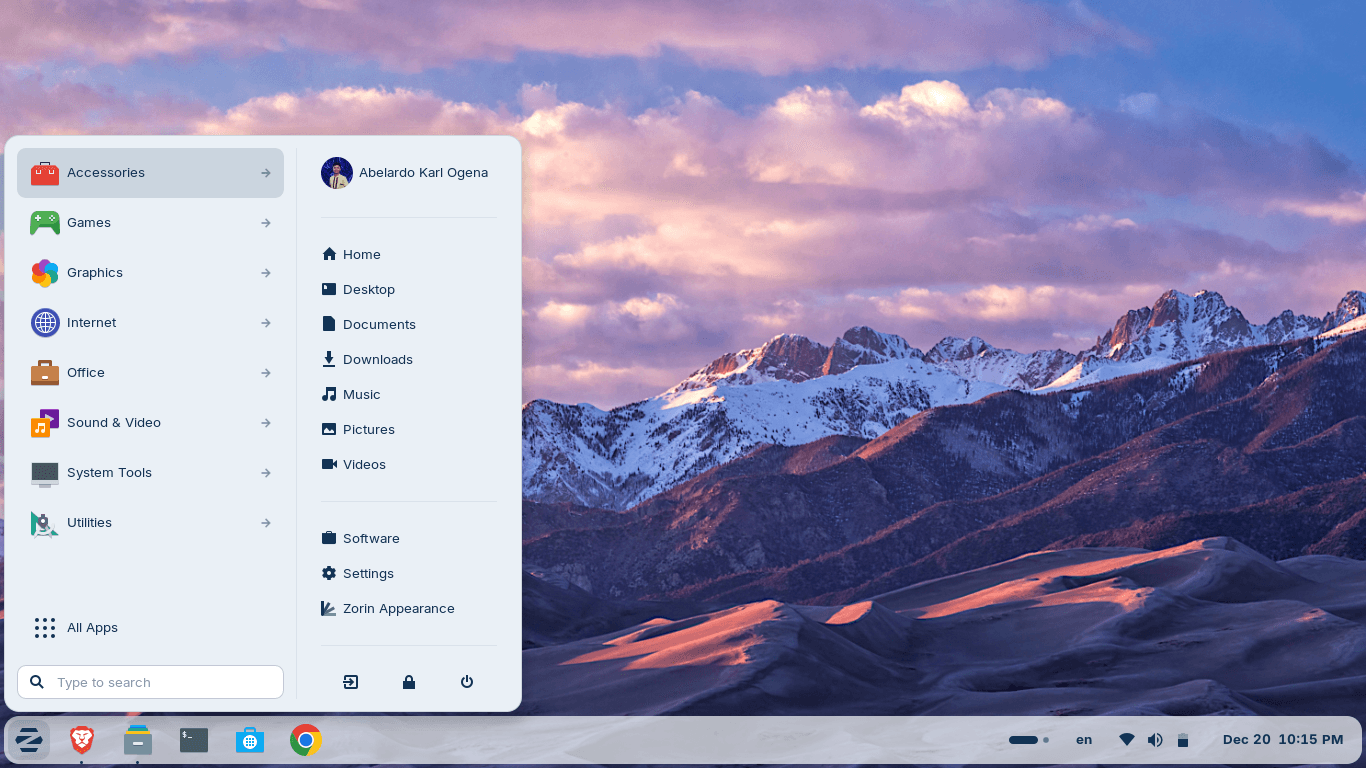
Zorin OS is an Ubuntu-based Linux distribution designed especially for newcomers to Linux. It has a Windows-like graphical user interface and many programs similar to those found in Windows.